Tuesday, 29 January 2013

French Aspirations in the Mali Campaign

Omeed Hasan
Queen's University

As French and Malian troops entered Doutenza and Diabaly, a feeling of uncertainty looms amidst the landlocked republic's population. For the 16 million Malians, the duration and outcome of the current French military campaign seems rather hazy, with a very real potential for a drawn out military conflict. French initiatives under Francois Hollande's leadership were publicly stated as being short-term in nature. However, France's historical ties to Northwest Africa (Maghreb) coupled with their ambition to play the role of a more potent conciliator in global affairs may indicate otherwiseFrance could seek to reestablish its military and political might over its once colonial territories.


By engaging the Islamist fighters of the National Movement for the Liberation of Azawad(MNLA) in the newly declared Azawad region, forces from France, Mali, and various West African states are effectively establishing a new front line against the Al-Qaeda off shoot in the Islamic Maghreb. This indicates France’s willingness to take a leading role in the new global war on terror. 

The successful acquisition of the northern Kidal, Gao, and Timbouctou regions of Mali by the MNLA and their allies was a significant development for the Al Qaeda, specifically Al-Qaeda in the Islamic Maghreb, since it effectively established a new safe haven and potential base for operations. It was a collaborative military effort was between Tuareg fighters, who had been battle-hardened from the preceding Libyan conflict, and the Islamist fighters of Ansar al-Din. The two factions proved to be dominant over the pro-government Mali forces. Territory that was formerly a hotspot for European tourists is now a cradle for Islamic fundamentalism within the region. Rapid advancements were made that led to a de-facto north-south division of Mali by the end of March of 2012. Under the auspices of the Pan-Sahel Initiative, the United States sponsored a counter terrorism training program for the Mali government, yet these efforts proved no match for the rebel forces. 

With the looming threat of the Islamist coalition would pushing onwards to Bamako, Mali’s capital city, it was a race against time for the French to ensure the entirety of geographic Mali remains under control of government forces.  Disrupting rebel supplies with airstrikes, while training West African and Malian troops to overtake the brunt of the day-to-day skirmishes. The reality of the expansion of a Sharia law further into the historical French Colonial Empire caused distress in Paris. 

The combat phase was initiated as French Mirage fighter planes began sorties over Mali on January 11, 2013 to eliminate a column of mobile rebel forces in central Mali, ending a 9 month long unchallenged Islamist rule in the Azawad region. This was the opening act of an asymmetric military campaign that was widely understood amongst the international community to only last a few weeks in duration. 
The short-term objectives are to prevent any further southerly territorial advancement by the MNLA. In this respect, France has proven itself successful by swiftly establishing its presence, as well as reviving a crippled Malian army. Long-term objectives are attempting a smooth and efficient transfer of the burden of the fight to Malian and West African troops under the ECOWAS umbrella. Although no direct military assistance from France’s European Union counterparts was given towards achieving the objectives the campaign, support shown through diplomatic and financial channels. 

The overwhelming firepower and technological advantage the French led coalition possesses over the MNLA has created the possibility of a scenario where guerilla forces will attempt to regroup over the Mauritanian border, allowing for pockets of conflict to emerge from the South and West.  A key development is that Islamist strongholds were taken out in the city of Gao, with Malian authorities claiming that this confrontation resulted in the death of 60 militants. This is one of a string of sobering events that have severely impeded the efforts of the Islamists of Azawad to create a command and control region for Jihadist operations.

There is a common misconception that majority of land in Mali will not yield significant strategic value for France in the future. France has steadily maintained its business pursuits in the former colonies, but has recently been under heavy competition from China, India, Germany, and the United States. In the same period where China’s proportion of imports into Africa grew from 3.4% to 12.5%, the French figures plummeted to 8.9% from 16.2%. The competition to win over West African nations’ allegiances for commercial interests may be giving France extra incentive to intervene in Mali. Mali has great potential in the oil and gas sector, although it requires a serious initiative to develop an adequate infrastructure that will be needed to effectively extract the oil and gas to enter the global markets. On top of this oil and gas potential, gold and uranium deposits remain scattered throughout Mali. 

In conflicts of this nature, it is the most marginalized within the society that will ultimately pay the price. The Malians have experienced recent suffering in the form of severe food shortages in this previous year— the military campaign may exacerbate the acute humanitarian crisis. The resulting pre-invasion displacement figures have been estimated 229,000 domestically displaced persons, with 147,000 fleeing into neighboring states, according to the United Nations High Commissioner for refugees.

Francois Hollande’s ensuing decisions come at a time that represent a critical crossroad in French foreign policy, as the previous decade was spent trying to reduce the military impression on the African continent. As nations in French West Africa started to gain independence in the 1960’s onwards, the French were diligent in solidifying defense agreements with their former colonies, in order to maintain a military presence in the region. The demilitarization over the last decade was seen in the form of an unprecedented closing military bases.  In late 2012, Hollande conveyed with certain degree of conviction to lawmakers in Senegal that no combat troops would be dispatched to counter Islamist forces in the Azawad region. With 2500 newly arrived French troops, there is clearly an incongruence between Hollande’s rhetoric and actions in this situation. A broad initiative to combat Islamist fighters may very well coincide with neocolonial aspirations of the French Republic.


France leads military intervention in mali to combat islamist militants. (2013). Jane's Intelligence Weekly, 5(5) Retrieved from http://search.proquest.com/docview/1269582183?accountid=6180

Blanchfield, M. (2013, Jan 17). France urges canada to support mali. Telegraph-Journal. Retrieved from http://search.proquest.com/docview/1270023401?accountid=6180 

French troops conducting military operations against extremists in mali. (2013, Jan 12). Telegraph-Journal. Retrieved from http://search.proquest.com/docview/1268790400?accountid=6180

Mali's evolving islamist crisis. (2012). Jane's Islamic Affairs Analyst, 12(8) Retrieved from http://search.proquest.com/docview/1033521114?accountid=6180

MALI/FRANCE: Strikes create space for regional role. (2013).United Kingdom: Oxford Analytica Ltd. Retrieved from http://search.proquest.com/docview/1269155873?accountid=6180

Saturday, 3 November 2012

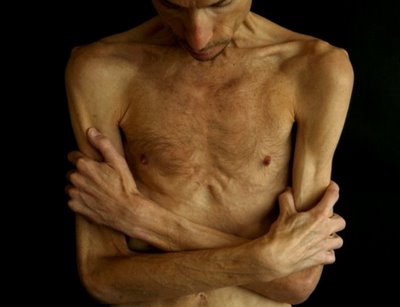
Anorexia Nervosa: The Ethical Dilemma of Force Feeding


Tetyana Pekar


Anorexia nervosa (AN) affects 0.1-1 percent of the population and has the highest mortality rate of any psychiatric illness1. Anorexia doesn’t discriminate against age, sexual orientation, gender, or race. Nor is it limited to Western countries or middle-class white girls. 

Occasionally, severe cases of anorexia nervosa gather media attention and a lot of controversy. At the heart of the matter is an ethical dilemma: whether and under what circumstances should patients be force-fed or allowed to starve themselves to death?

Several such cases have recently been publicized. The first case is a 32-year-old former medical student from Wales2, known only as "E." E hasn’t had solid food for more than a year and has a body mass index (BMI) of 11-12—a normal BMI is 20-25. Although she does not want to die per se, E, above all, does not want to be fed. Her chances of recovery are between 10-20 percent, according to a consulting psychiatrist and eating disorder specialist. Those who know her well—including her parents—oppose further treatment and believe she deserves the right to die with dignity. 

The second case3 is of an anorexic known as "L." L is 29-years-old, and in the last 15 years, she has spent 90 percent of her time as an in-patient. She weighs just 45 lbs. Like E, L did not express a desire to die, but stated that “her severe anorexia ‘did not allow her to eat.’ ”

Typically, such ethical dilemmas are approached by attempting to grant the competent patient’s wishes, helping the patient, and considering the interests of all involved. The situation in anorexia nervosa, however, is much more complex. 

Anorexia nervosa patients are typically not psychotic and often do not pose an imminent risk to themselves—they are generally not suicidal, and don’t express an overt desire to die, although their actions certainly lead to a slow death. They are usually competent, and quite rational, they are “just unable" to eat enough to maintain a normal weight. 

Interestingly, the High Court judges ruled differently in these two cases. In the case of E, the judge ruled that she should be force-fed, alluding to the fact that E may not, at this time, fully appreciate that we only get one chance at life. In the case of L, however, the judge concluded that although nutrition and hydration should be offered to L, staff were not permitted to use "force" to administer food, water, or medicine. 

Charlotte Green4, a 35-year-old anorexia nervosa patient who spoke to the UK newspaper The Telegraph in response to these cases, stated that the duration and severity of the illness are important factors that must be considered whenever the decision to force-feed is made. 

For Green, who has been severely sick for over a decade and spent most of that time in treatment, the prospects of recovery are grim. “I have been ill for 15 years and it only gets harder… I want to be allowed responsibility for what happens next,” Green said.

Starvation alters the way our brains function. It is conceivable that once re-fed, these patients will be thankful for the decisions made on their behalf; certainly, there are patients with anorexia nervosa who were force-fed at one point and are now recovered. But, the opposite scenario could just as easily be true: forced feeding could cause more suffering for the patient and the family, as caregiving for a patient that refuses treatment is incredibly difficult. 

What if it is too late? We cannot force patients to recover—force feeding for life is unsustainable. 

Green—who has been sick for 15 years—doesn’t want any more money wasted on treatment, wasted because she doesn’t “engage” in it. “They [the psychiatrists] can make me pretend as much as they want to—but in the end I’m only pretending,” she adds. 

Shouldn’t patients in these situations be allowed to die with dignity? What are doctors to do when patients don’t want to die, but cannot eat? Refuse to eat. How do you treat someone for whom death is a better alternative than eating?

This is the illness talking. Winning. But, if treatment for decades has failed, does it ever come to a point where clinicians and parents can say, what’s been done has been done, we can’t do any more?

An astute commentator on a Facebook page for FEAST (Families Empowered and Supporting Treatment for Eating Disorders) wrote that “the biggest ethical issue here is in the failure to treat adequately while this woman (referring to the case of L) still had hope,” adding that “there may come a point of no return in some people’s AN.” 

Some, like Laura Collins, author of Eating with Your Anorexic, believe that allowing these patients to die is akin to murder. On the same Facebook thread, Collins wrote “To hospitalize without restoring normal health, to depend on the mentally ill patient's assessment, and to believe that the real person in there 'wants' to die [is murder]. We would do better for someone in a coma. This is a basic misunderstanding of the nature of anorexia nervosa. If they 'allow' her illness to kill her they are making themselves more comfortable, not her—she only gets one life and it is not her fault or choice that they've failed her so thoroughly (emphasis mine).” 

Although caregivers are not required to sacrifice themselves to save someone, especially if their prospects of recovery are grim, we cannot ignore or deny the important role that strong emotional reactions may have on the physicians' and caregivers' decisions with regard to treatment. To what extent are the decisions made by the judges based on making themselves, and the treatment team, feel comfortable? 

Historically, patients with anorexia nervosa have achieved a reputation of being notoriously difficult to treat. Resistant, deceitful, manipulative, greedy, selfish, and narcissistic are just some of the words that physicians have used to describe AN patients5

Caring for a patient with AN6 can be emotionally and financially draining, and this has grave implications for how patients are treated; particularly in cases where the decision to force-feed becomes unavoidable. 

The concern is that treatment might be withheld because patients are perceived as being difficult. Hebert and Weingarten, in their analysis of the ethics of forced feeding in anorexia nervosa7, worry “that an analysis of futility that uses only abstractions such as benefits and burden may simply be a post-facto rationalization of the strong negative feelings such patients evoke in others.” 

If the patient with anorexia nervosa is deemed incompetent, then is it up to the parents and physicians—who are likely mentally exhausted from years of treatment—to decide? If, on the other hand, the patient is deemed competent, but not suicidal—with no intention to die, but no ability to do what’s necessary to survive—do we grant the patient ability to refuse food when food refusal is at the very heart of this disorder? 

Appelbaum and Rumpf, in their paper titled Civil Commitment to the Anorexic Patient8 write that “denial is such an integral part of the disorder, even many anorexics who can recite lists of adverse outcomes associated with their disorders are, at the same time, quite sure that none of these events will ever happen to them. Although these patients are not globally incompetent, they may well be incompetent to make decisions about providing themselves with basic sustenance or obtaining medical care.” Is this letting anorexia win or is it acknowledging that this deadly illness is often intractable? 

For many of these cases perhaps it is too late. But one thing is clear: in all of these cases, those in charge of treatment (or financing treatment) have failed; even just by letting their patient’s disorder get this far. To deny someone treatment—as many insurance companies do—is to fail patients; to discharge patients when they are not ready because treating them is too hard, is to fail patients. To belittle, dismiss and minimize the grave nature of this illness is to fail these patients. 

Inability to eat enough to maintain a healthy weight is at the center of this disorder and allowing patients to refuse food under the guise of autonomy is admitting the illness won. 

We can do better. We have to. We need to provide better treatment—and provide it early on, before eating disorder behaviours become engrained. We need to educate health care professionals, medical students, families and partners about this disorder, because recovery is possible and death is preventable. 

References
  1. Smink, R.E.F., van Hoeken, D. and Hoek, W.H. (2012). Epidemiology of Eating Disorders: Incidence, Prevalence and Mortality Rates. Curr Psychiatry Rep 14(4): 406-414.
  2. Anorexic medical student should be fed against her will, judge rules. (2012, June 15). Telegraph. Available online: http://www.telegraph.co.uk/health/healthnews/9334118/Anorexic-medical-student-should-be-fed-against-her-will-judge-rules.html 
  3. Anorexic woman not be force-fed, judge rules. (2012, August 24). BBC News UK. Available online: http://www.bbc.co.uk/news/uk-19369239
  4. Donnelly, L. (2012, August 5). Anorexia: ‘You can’t force me to live’. Telegraph. Available online: http://www.telegraph.co.uk/health/healthnews/9451734/Anorexia-You-cant-force-me-to-live.html
  5. Thompson-Brenner, H., Satir, D.A., Franko, D.L. and Herzog, D.B. (2012). Clinician reactions to patients with eating disorders: a review of the literature. 63(1):73-8. 
  6. Treasure, J., Murphy, T., Szumkler, G., Todd, G., Gavan, K., and Joyce, J. (2001). The experience of caregiving for severe mental illness: a comparison between anorexia nervosa and psychosis. Soc Psychiatry PsychiatrEpidemiol36(7):343-347.
  7. Hébert, P.C. and Weingarten, M.A. (1991). The ethics of forced feeding in anorexia nervosa. CMAJ 144(2):141-144.
  8. Appelbaum, P.S. and Rumpf, T. (1998). Civil commitment of the anorexic patient. Gen Hosp Psychiatry 20(4):225-230.

Starve: Adventures in Male Body Image

Devin McDonald

I sit here with hunger in my stomach. I contemplate whether or not to eat something. I could continue to starve myself until 6pm or I could eat something more befitting of my caloric requirements. That's to say, not just coffee, almonds and Preventia; the current composition of my diet. Though I would like to say that this behavior is some sort of act of self discipline, asceticism, or religious fasting, it is more accurately a feature of my neurotic—if not wholly irrational—approach to weight loss. After returning from Japan earlier this year, I discovered that my weight had risen by about 10 lbs (apparently, ramen is much fattier than it looks). Upon discovering my body's adoption of ten butter sticks, I shifted my mental fortitude towards the practice of weight loss. My form of dieting consists largely of not eating, as opposed to more strategic formulations of planned meals or low calorie foods or whatever the diet de jour happens to be. I have been informed, perhaps ad nauseum, of the ill conceived nature of my plan. Yet I persist daily pondering whether to indulge in another packet of Preventia.


I am revealing all of this to you not because I think my dieting habits are especially interesting or something you ought to follow. In fact, I find writing this quite uncomfortable. It is not easy for me, as a heterosexual male, who for all intents and purposes is quite normal, to admit that I have body image issues. Nonetheless, I am writing about this because I think I am anything but an exception. I think I am part of a silent majority of men who struggle to find satisfaction with their body image. 

There is a notable public discourse on the body image pressures women face. It is even a feature of pop culture for women to dread over the vicissitudes of their weight or to dote over their public image. Yet this is rarely the case for men, only the vainest characters might obsess over their outfit or their physical condition (barring physical condition for sports). This is not to say that women do not face immense pressure about their body image, but rather that men face similar if not equal pressure to conform to an unattainable ideal—Adonis is just as coveted as Venus. The difference is that men have not had the same emotional release valves available to them.

The most dominant social construction of male body image is one of contradiction. Ostensibly we are taught to not care about what we look like. Real men are too busy logging forests or lifting rocks to bare any attention to their outward appearance. Clothing is a matter of utility. Skin is a matter of irritation. Selling body care products to men must be done either by appealing to the magnetic affect the product has in drawing women, or through the convenience of its use. Yet despite the assumption of apathy towards appearance there is still pressure to look like you are the captain of the rowing team; until we have become walking inverted triangles we have failed to acquire any sense of manhood. Notably, just as the vast majority of women’s bodies do not adhere to the super model body image, the vast majority of men do not adhere to any equivalent platonic ideal. 

What is perhaps most troubling about the paradoxical nature of male body image is the lack of avenues it avails to men to talk about their insecurities. It's not exactly poker table conversation to talk about your concern for your the extra weight around your hips, or your under-defined arms, all this between burps and gulps of beer. You're caught forfeiting your manhood lest you attempting to air any insecurities. 

Body images issues for women are increasingly within the scope of the public eye. Dove's famous campaign focused on accepting the diversity of the female form and the implication that there is no perfect body type is a good example. 

One need not look further than the use of steroids as a demonstration of male body images issues. So compelling is the need for the ideal body, some men pursue the use of both illegal and dangerous substances to assist in their endless chase of perfection. The US-based National Institute for Drug Use reports that the use of anabolic steroids can lead to “kidney impairment or failure; damage to the liver; and cardiovascular problems including enlargement of the heart, high blood pressure, and changes in blood cholesterol leading to an increased risk of stroke and heart attack.” The drug can also have long-term psychiatric complications including the notorious “roid rage,” in addition to other states of mental instability. 

Even worse perhaps, is the silence which surrounds the issue of male anorexia and bulimia. 20 percent of those with either of the two diseases is male but given the public image of body images condition one would think the condition only afflicts the female half of the population. The focus of treatment on women is strong enough to make it significantly harder for men to recover. Men afflicted with anorexia take, on average, one-third longer to recover. This is likely due to the immense difficulty one would have in admitting they have a problem and seeking help; I have difficulty imagining something harder than admitting to have a condition which is branded by the public as residing wholly in the sphere of the female. 


A recent GQ article chronicled the dire state of support for male anorexics and bulimics. They found that a majority of treatment centres did not admit male patients due to the gender focused nature of their treatment. If a male becomes an anorexic they face the dually troubling feat of both admitting their affliction and seeking out nearly non-existent treatment options. 

Making progress on body image issues for both men and women require that we move forward in our understanding of the state of mind that drives someone to starve themselves into ill health. Common features of anorexics are obsessive, perfectionist, and neurotic behaviors. We need to recognize that the juncture of these mental attributes and a society which drives its member to physical obsession are the cause of anorexia and bulimia. Bulimia arises not from the some innate female qualities but rather from the pressures mentioned above.

The intent of the essay is not to undermine the value of all the work that goes into supporting the pressures women face with regards to their body. They face just as steep a hill as men, if not steeper, as evidenced by the 80 percent of anorexics that are female. Rather the intent is bring to light and contribute to the growing dialogue about the issues men face with their bodies. Silence does not betoken apathy but often an inner struggle confronting the paradox of the ideal male. It is easy to appear not to have body images issues when you are a TV character who embodies everything that is the ideal. Yet, in reality not everyone can have a six-pack or shoulders like an ox. What we should recognize as a society is that not having those features is just fine. Just as the women in the Dove commercial are shown accepting their body, why can't men?

Fortunately, I am not anorexic nor bulimic but I cannot say with confidence this is due to a complete invulnerability. Rather, I feel this is in part due to the support I have available to me. I have a strong group of friend and a supportive family. I often feel that in other circumstances the obsessive, neurotic, and compulsive natures which often drive my ability could spur on a much more harrowing affliction than my occasional dieting. Yet there remains innumerable men who do not have the support systems I do, who may fall into a similar trap but find themselves in a hall of silence. 

Friday, 2 November 2012

“People don’t shape stereotypes. Stereotypes shape people.”


Arnav Agarwal 

Friday, June 29th, 5:20pm, Toronto. Public transit, back-seat. Rosa Parks might disagree, but sitting at the back of the bus carries its own sense of adventure. A young student belonging to an ethnic minority group walks onto the bus, dropping his coins into the machine at the front and picking up a transfer from the bus-driver. He walks to the back of the bus, a small grin on his face and skateboard in hand. As he finds a seat at the back, he peers out the window, and receives a smile from his friend on the exterior of the bus. Pulling open the window with a slight tug, he stretches his arm and quickly throws something out the window. A breeze propels his small paper ball floats under the bus. 

Outside, the boy’s friend—also an ethnic minority—bends underneath the bus to retrieve the seemingly discarded paper. He picks himself up, dusting off his pants before casually walking to the front of the bus, opens the ball, and shows a transfer ticket to the bus-driver before making his way to his friend. One transfer allowed three young people to board the bus, as they repeated the act twice more times within a span of three minutes. I was just as intrigued by the cleverness of this plan as I was shocked by how far people can go to save $3.25. 

As I shared this experience with one of my friends, he shook his head in disapproval. “Why are you even surprised?” he asked. “That’s their way. What do you expect?” While I couldn’t disagree more with his prejudice, he raised an important question: what do we expect? In a multicultural hub, marked by its dynamic diversity, we have engineered a society that has a mindset of its own. Some may see this as a good thing—conforming to a unified social perspective. They couldn’t be further from the truth. 

When we examine “at-risk” groups in educational institutions, minority ethnicities are often the highest on the list. Similar trends can be found in crime rates across the globe. A prime example of this is an article in the UK’s Daily Mail, which stated that authorities hold the black population responsible for both the majority of crimes committed and for being twice as likely to be victims of crime, despite only 12 percent of London’s 7.5 million people being black in ethnicity. The article, published in 2010 and titled “black men ‘to blame for most violent crime’…but they’re also the victims”, mentioned 67% of those caught for gun crimes in 2009-2010 in London were black, and the police held black men responsible for two-thirds of shootings and more than half the robberies and street crimes in London, according to figures released by Scotland Yard. A critical eye was placed on black women as well, with 52% of robberies, 45% of knife crimes, and 58% of gun crimes that police had an involvement with being placed on them.[1] 

Is there something different about these ethnicities? Or are we looking for an answer that isn’t even out there? We often attribute qualities to certain groups, whether ethnic in nature or otherwise. There are numerous theories as to what gives rise to these stereotypes. These ethnic minority groups are no different. Several have come to take on a stereotype of violence, substance abuse, low academic performance, and uncivil activity. There are several theories—among which are the subculture of violence theory, the social control theory, and the macro-structural opportunity theory—which strive to find a definitive explanation for this behaviour. These ethnic groups have essentially come to take on an intricate identity in the public eye, which can be captured by one word: danger. 
But this is not about the trends themselves, but rather what gives rise to it. The answer to that is clear: the answer lies in the question itself. Stereotypes give rise to stereotypical behaviour. It may seem paradoxical; after all, doesn’t consistent human behaviour produce stereotypes? What is truly paradoxical, however, is how oblivious we are to the environment we create through stereotyping, which gives rise to these behavioural trends. A well-known case in psychology involved parents who deceived their child into believing they were female for over fourteen years of their life, until the child finally identified as being male in gender at the age of fourteen.[2] How is society any different? By making a baseless perspective so commonplace in the social framework, we have almost laid out an expectation of “danger.” If an ethnic group is raised in an environment where it is marginalized by the views of the very society that nurtures it, what more are we to expect? It’s ironic that psychology is rooted in an ongoing debate regarding nature versus nurture. While it is clear that human behaviour isn’t shaped solely by the nature of an individual, we nurture our people in a hostile environment of negative expectations. 

Does this excuse the high rates of violence, the low rates of academic performance, or the offender’s crime on the public transit? Of course not. But it’s hard to expect a seed to flourish into a flower when the soil itself is arid and lacking. 


[1] http://www.dailymail.co.uk/news/article-1290047/Metropolitan-Police-crime-statistics-reveal-violent-criminals-black--victims.html 

[2] http://people.uncw.edu/bruce/psy%20265/pdfs/inter%201.pdf

New Insite: The Benefits of Safe Injection Sites


Mohamed Sarraj

Imagine you are a child walking home from school in a cluttered downtown core. You trip in a heap of garbage and turn to realize there’s more to it. A woman who looks to be around 30 years old is buried beneath the trash. She is riddled with needle tracks; her body has just expunged all waste to try to flush out the toxins that have left an expression of terror frozen on her face. She’d died alone, stripped of her humanity, left to rot in the sun by the trash. But she isn’t trash. She is somebody’s daughter, somebody’s sister, somebody’s mother. She does not deserve that. 

In many areas, the sight of such extremely disadvantaged people is as common as it is wrong. The problem exists, but what can be done about it? 

Safe injection sites give intravenous drug users a supervised and legal environment to inject. Safe needles are provided, medical attention is at hand, and detoxification and rehab facilities are usually in the same building. Vancouver’s safe injection site, Insite, is an answer to the East Side’s drug pandemic. Needles were strewn over the streets, alleyways were a sure place to find a dead body, and public injection was rife. Proponents of safe injection sites in Vancouver and elsewhere have argued that they directly save lives, reduce addiction, and improve public order.


It is important to note that safe injection sites cater to the disadvantaged who would otherwise be injecting on the streets. Infectious diseases arising from needle sharing—such as HIV or hepatitis—are a fatal pronouncement for these people who would often rather die than approach the medical system. But the prevention of infectious disease in safe injection sites also saves the wider public from these diseases, which will inevitably spread. In fact, a study in the Canadian Medical Association journal showed that Insite could save the healthcare system $20 million and significantly increase life span in the next ten years by stemming the spread of infectious disease.

Infectious disease is not the only concern. Drug overdose kills, and kills frequently. It begins with slow respiratory failure that renders the user unable to respond and soon unable to effectively move. Nobody has ever died of drug overdose at Insite because medical staff is on hand to help. In fact, Insite has cut overall overdose deaths in the area by 35 percent according to a study in the Lancet Medical Journal.
 Beside dumpsters in dark alleyways, let’s just say medical staff is rare, at best.

Almost counter-intuitively, safe injection sites can help people overcome their addictions. Drug addiction is a terrifying reality that many of society’s disadvantaged live with. It’s a waking and sleeping horror. But what do addicts get on top of it? They’re labelled as criminals, scum, and trash. They’re shunned and confined to shooting up in terrible conditions. To give them this baseline respect puts them a step closer to even the most basic healthcare we guarantee for all citizens. 

In a clean and secure environment, addicts can develop a closer trust with staff that is essential for the physician-patient relationship. Many addicts stay away from rehabilitation or treatment facilities because of alienation, fear, and distrust. Bringing them into the heart of healthcare is a crucial step to treatment and care. In 2010, Insite made 5,000 referrals to other services including onsite rehabilitation, with record completion rates. The model has been successful. 

Others say, however, that to expand these facilities is to legitimize and encourage drug use. But I would argue that being treated as someone who is sick, surrounded by medical staff, and constantly monitored does not attract those who do not use drugs. They are seen as a blessing by those who are currently addicted, but first-time drug users never plan on being addicted and would hardly think about safe injection sites when considering drugs to start with.

Yet some may say that it is the very negative conditions surrounding drug use that discourage it, and safe injection sites only alleviate the deterrents of drug use. These deterrents include death, alienation, and legal troubles. But again, initial drug use is hardly rational, and even so, a life with drugs in Vancouver, or anywhere, is still obviously worse than one without. Even assuming that safe injection sites may encourage some drug use, the effect is minimal, and it is still for the greatest good to expand the sites. 

The issue of perception also plays a big part in safe injection sites. In Vancouver, Insite reduced the amount of discarded needles and public injections. Many argue that seeing this particular public disorder encourages and creates an environment in which crime thrives. However, others argued before that Insite would have led to a migration of drug trafficking into Vancouver. The data show little to no negative impact on crime.

Strict illegality should never take precedence over a policy that can help save citizens, improve general health, and reduce addiction. Insite has worked in Vancouver and it can work in other parts of the country. People deserve better, and stigma should not push us into shying away from real problems.


The Health Impact Fund: Driving Innovation to Improve Access to Medicines


Nicole Bechard, Anna Kobylianskii, Amro Qaddoura, and Harkanwal  Randhawa  
    
  One-third of the world’s population lacks access to essential medicines. In Asia and Africa, this figure rises to one-half of the population. Even more astounding, over 14 million people are killed by infectious diseases each year, 90 percent of whom reside in developing countries. The majority of these diseases can be treated and perhaps even cured with existing medicines. However, many of these drugs are too expensive for individuals to purchase and some drugs are completely unavailable in certain countries.      

This lack of access arises because some medically necessary drugs are simply unprofitable for drug companies to produce. Estimates for the cost of developing a new drug range from $800 million to more than $1 billion. Although these estimates are often criticized for being inflated, it is clear that drug innovation requires enormous investments by pharmaceutical companies. 

Typically, these investments are protected by patents that afford the innovator exclusive rights to produce and sell the drug for a set period of time. To profit—while recouping its research and development costs—pharmaceutical companies charge high prices for this drug while they have a monopoly over the market. Naturally, these prices cause the cost of medicines to be prohibitively high, limiting access to the medicine. 

Although public pressures on the pharmaceutical industry and increased competition from generic drugs have been of great help, the issue with access remains and many people worldwide still cannot fulfill their medicinal needs. Any solution that aims to increase access to medicine by decreasing their market price must also account for the fact that in order to drive innovation, there must be a financial incentive for pharmaceutical companies to invest in research and development.

The Health Impact Fund (HIF) is a proposed financing scheme for pharmaceuticals that would incentivize innovation based on the measured performance (health impact) of a drug. It is a pay-for-performance scheme that simultaneously addresses both the innovation and access to care problems. This is in contrast to the patent system, which is effective in encouraging innovation but primarily favours the development of highly profitable drugs rather than those that have the largest impact in society. By allowing innovators to be compensated based on the assessed health impact of their drug and having the drugs sold at cost, the HIF would provide financial incentive for innovation and increase access to lifesaving medications.

The HIF would be financed by countries that contribute to a fixed pool of funds, which would be paid out annually to eligible innovators. Pharmaceutical companies would have the opportunity to register their drugs with the HIF, and the assessed health impact of the drug during the previous year would determine the proportion of the fund that would be awarded for that drug. It is estimated that with a pool of $6 billion, the HIF would support a total of 20 drugs, each of which would be eligible for HIF funding for 10 years. This model could easily be expanded to more than 20 drugs if government and other donors increased their contributions. Essentially, this model provides a long-term and stable source of income that would encourage ongoing innovation. 

When assessing health impact, the HIF would take into account a variety of factors to estimate the difference between the health status of people who used the product in question and their estimated health status had that product not been available to them. To inform this assessment, the HIF would utilize data from many sources, including clinical trials, practical trials, sales data, sampling of product use, and data on the global burden of disease. Although the HIF system recognizes the significant difficulty incumbent to assessing health impact, it is a more informed reward mechanism than the one currently in place.

As of today, the HIF is planning its pilot projects. Since the HIF is currently a proposal, these pilots are necessary in order to test its effectiveness. The aim of the pilot is to reward a pharmaceutical manufacturer on the basis of measured health impact in a region. This pilot will allow the pay-for-performance approach to be field-tested and refined before it is implemented on a wider scale.
Ultimately, the HIF is an exciting and novel proposal that could fundamentally change the pharmaceutical industry and lower the cost of medicines, not only in lower-income countries, but in countries around the world. By harnessing the primary driving force behind corporations—financial gain—and tying it to health impact, the HIF is a practical solution to the critical access-to-medicine problem. If the Health Impact Fund is to become a reality, it requires the support and commitment of politicians, academics, and corporations around the world. 

1. Doctors Without Borders. Access to Medicines. 2012 [cited 2012 Oct 17]. Available from: http://www.doctorswithoutborders.org/news/issue.cfm?id=2379     

2. Mercurio B. Resolving the public health crisis in the developing world: problems and barriers of access to essential medicines. Northwestern University Journal of International Human Rights.  2007 Feb:5(1). Available from: http://www.law.northwestern.edu/jihr/v5/n1/1/     

3. Collier R. Drug development cost estimates hard to swallow. CMAJ. 2009  Feb;180(3):279-280. Available from: http://www.cmaj.ca/content/180/3/279.full  

4. Health Impact Fund. Proposal and Pilot. [cited 2012 Oct 17].  Available from: http://www.healthimpactfund.org/pilot.html  

5. Hollis A and Pogge T. The Health Impact Fund: Making New Medicines Accessible for All. Incentives for Global Health; 2008 [cited 2012 Oct 17]. Available from: http://www.healthimpactfund.org/e-­‐library.html    

Asian-Pacific Distraction Politics: The Diaoyu Islands


Stephen Zhao

Even at the best of times relations between China and Japan have been delicate. With memories of Imperialist Japan and the Second World War strongly engrained in Chinese public consciousness, diplomatic incidents with Japan tend to create an overreaction with the Chinese public. Recently, animosity between the two states has escalated to new levels with the dispute over ownership of the Senkaku/Diaoyu Islands.

The root of the disputes date back to 1968, when a UN report suggested that the islands may hold oil underneath them. In the 1970s, both Mainland China and Taiwan instated territorial claims towards these islands as a result of the new findings. These claims were of minor significance until 1996, when the Japanese Youth Federation repaired a lighthouse on one of the Senkaku Islands. As a result of these actions, anti-Japanese protests flared up across China. The streets were filled with protesters chanting anti-Japanese slogans and large portions of the public boycotted Japanese products. Although these protests eventually subsided, Japan and China never reached a concrete agreement regarding the ownership of the islands. The official diplomatic stance on the Islands was to agree to disagree. 


These islands now have returned to the forefront of Sino-Japanese relations following the Tokyo Municipality's decision to purchase the islands from their private owner, rendering them as official Japanese state property. Both state and private media in China reported this action as an unacceptable violation of China's sovereign rights. The inflammatory statements from every conceivable media outlet in China spurred a volatile reaction from the populace. Large swaths of angry Chinese rampaged through the streets, smashing anything Japanese – from stores to cars to consulates. As a result of the outrage, the Japanese suffered sizeable economic setbacks in the form of frozen inventories, heavy reductions in tourism, and waning market confidence in an already stagnant economy. In China, violence by protestors result in death while vandalism caused immense property damage. Across the nation, businesses and factories closed to protect themselves from unrest. 

One must wonder with all this madness:  who is right and who is wrong? The answer is no one and everyone. 

The timing of this diplomatic crisis could not be more perfect for these two countries. China is in the midst of a crucial power transition from the current Hu Jintao regime to its successors. If the public is preoccupied with Japan, they cannot disrupt the government transition with displays of disapproval or other seditious activities. Similarly, Japan is nearing an election. As economic indicators in Japan are rather lacklustre, the incumbent regime seeks to shore up support by showcasing strength in foreign policy. Escalating the Island dispute benefits both governments by directing the attention of their public spheres away from domestic affairs. However, this does not mean that this incident is a part of some insidious government scheme. 

While it may benefit the respective governments of China and Japan to take hardline stances on the issue, they only do so to appeal to the public sphere. Once the Chinese government brings attention to the island dispute through state media, applications for protests and demonstrations will flood in on their own accord. With September 18th being the 71st anniversary of the 1941 Japanese annexation of North East China, Japanese claims for the islands will undoubtedly provoke Chinese outcry as anti-Japanese sentiment run high in China. The outrage runs to such heights that the government in China must use its powers to restrain protesters from becoming too militant. Large segments of Japanese society view the nation's foreign policy as weak and unfit for a nation as large and economically influential as Japan. They see little reason for Japan's rather passive stance in international politics and some even question the point of Japanese pacifism. These people, although nowhere near being the majority of the Japanese population, are still significant enough to warrant political pandering. The development of the Senkaku Islands dispute is indicative of significant issues facing both Chinese and Japanese society. 

Both the claims of China and Japan are dodgy at best and reasonably, no party should be that outraged. The Chinese must look back at least four centuries until they see a point in time when they actually controlled the islands, and even then, the islands were nearly uninhabited and part of a Chinese vassal instead of China proper. The Japanese have only ever obtained the islands as a part of their colonial expansion in the late 19th century – their best claim is still morally unsound.

 Japan keeps reviving the issue of the islands despite the nigh-impossibility of Chinese acquiescence to elicit support by appealing to a public opinion that reflects a disregard for history. Outside post-secondary education, Japanese history lessons generally omit the nation's dark past of mass slaughter and human rights abuse. Naturally without this context, many would believe that land acquired during Japan's colonial era is rightfully theirs. This dispute is only one of the myriad of problems associated with the Japanese government's use of revisionist history. Chinese society has similar problems: Instead of omitting historical details, Chinese education strongly emphasizes its oppressed past. The Chinese Communist Party shifted the basis of their legitimacy from communism to economic progress and nationalism which requires them to frame Chinese history in a manner that perpetuated anti-foreign sentiment. Despite how powerful China is in compared to Japan these nations, much of the Chinese public see all foreign disagreements with China as both bullying and oppressive. This opinion compels the public to demand a hardline stance from the government on issues of territorial sovereignty, though these demands usually remain unmet. 


The islands dispute and others like it will remain unresolved in the foreseeable future. The relevance of these issues stem from revisionist accounts of history which have inflamed nationalism. These diplomatic incidents will remain useful tools for the government to use as distractions. However, it is doubtful that military conflict will arise from the land claims, as China and Japan are too economically interdependent. A conflict with China would cripple Japan economically while Japan's alliance with the United States makes instigating military action a dangerous move for China. Even if the dispute does not result in force of arms, it will continue to plague Sino-Japanese relations and act as a destabilizing factor for the Asia-Pacific region. 

1 Malcolm Moore, “Military Conflict 'looms' between Japan and China,” The Telegraph, September 27th, 2012. http://www.telegraph.co.uk/news/worldnews/asia/china/9571032/Military-conflict-looms-between-China-and-Japan.html 

2 “Senkaku Diaoyu Islands,” Global Security, October 24th, 2012. http://www.globalsecurity.org/military/world/war/senkaku.htm 

3. “The Ryukyu Kingdom and Its Relationship with China and Japan”, Okinawa Peace Network of Los Angeles, October 24th, 2012. http://www.uchinanchu.org/uchinanchu/history_early.htm